How to Increase Wifi Upload Speed Android
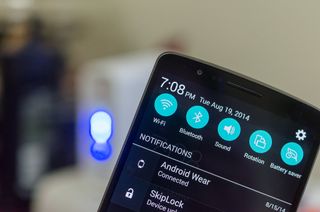
The ultimate guide to Wifi and Android
Anybody with a smartphone knows most Wifi. If zilch else, you know information technology'due south what happens when you go your AT&T telephone likewise shut to a Starbucks and your Internet gets faster (or slower) because you were automagically switched from a cell belfry connection to a closer — but lower-powered — wireless connectedness that'southward made available for the public.
Of course, there is a lot going on to make that connection happen. While we're not going to dig into anything too technical like the software stack or the radio interface hardware, we are going to talk almost the things yous and I, every bit users, should know.
Don't worry, this'll be fun!
What is Wifi?
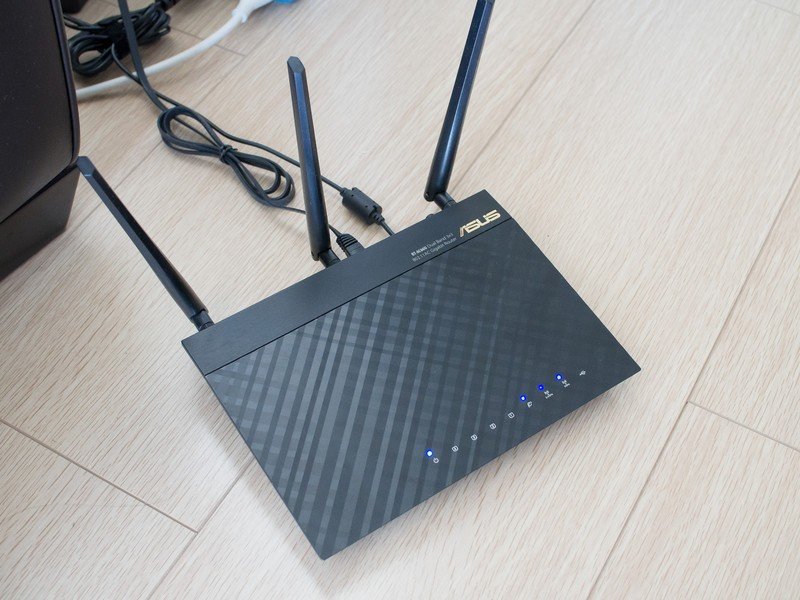
Wifi, or WIFI, or Wi-Fi, or even WiFi refers to whatever local access wireless network that is based on the IEEE (Plant of Electrical and Electronics Engineers) 802.11 standards. Devices on a Wifi network substitution data through the airwaves using either a 2.4 GHz Ultra high frequency or 5 GHz Super loftier frequency (I'm not making these names up!) connection.
A typical Wifi setup consists of an Internet gateway (commonly a modem) and an admission point. The modem is connected to the Internet, and the access point has a defended connection to the modem. What the access point can practise (at home, your router is your access point) is filter the things y'all send and receive from the Internet and distribute them wirelessly to the device that made the request.
There is a lot of complicated software at work on your admission signal, and even the administration interface tin be a bit confusing. All we actually demand to know is that a properly setup WLAN (Wireless Local Area Network) lets the states connect our phone or tablet or Chromebook to the Net through a Wifi connection. Leave the complicated stuff to nerds with lots of letters subsequently their name.
Why do I see so many available Wifi connections on my phone?
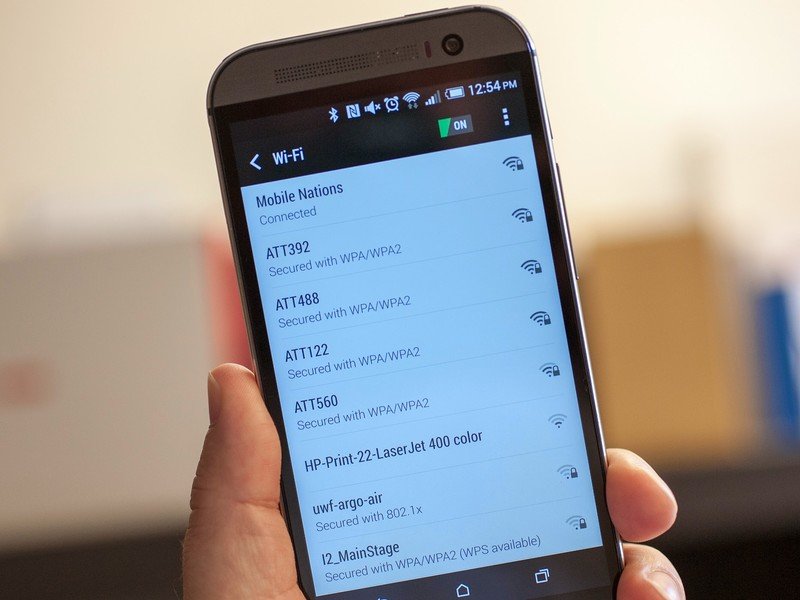
When you open up the Wifi settings on your phone, yous come across a list of every access point you've ever connected to, besides equally every access point in range that broadcasts its presence. This can be a bit disruptive because that picayune hamburger joint you connected to in Jacksonville will exist listed, but you're non likely going to exist able to connect if you're in Pittsburgh. Information technology gets even more disruptive when admission points are named ATT488 instead of "AT&T Wifi on Kickoff St."
If you lot give your phone a few seconds, or gyre down and tell it to search again if you're the impatient type, this view will let yous know which access points are in range (and how strong the signal is based on the little icon) and which ones yous have saved but are out of range. You're able to try and connect to whatever access point that is in range. You can too delete old connections that you'll never want to utilise once more.
Note that this may not be every access point in range. When y'all setup a Wifi network yous're able to decide if the proper name is broadcast and visible or not. If the SSID (don't worry, nosotros're going to cover all those acronyms down the page a bit) is not broadcast, it won't show up in your list and you'll accept to setup a connection manually.
Basic Wifi terminology (what practice all those letters and numbers hateful?)
Like anything that can get a fiddling technical, when y'all're discussing Wifi networks you're going to run into a lot of letters that represent something. People that develop this sort of thing hate typing long things like Plant of Electrical and Electronics Engineers so they shorten information technology to IEEE. Many of them are as well a wee scrap sadistic and similar to mess with people. When you add those two things together, you'll cease upwards with a long list of abbreviations and acronyms that normal folks similar u.s.a. need to wait up and so nosotros know what the hell is going on. Here's a short list of the letters and numbers you're likely to run into, and what they mean.
- 802.11 a/b/g/northward/ac — 802.11 refers to the IEEE 802.11 specifications for wireless networking on the two.4 GHz, iii.6 GHz, five GHz and 60 GHz frequencies. Whatsoever device that's Wifi certified volition follow these standards. The letter of the alphabet you see later on stands for a specific protocol that determines things like range and speed. More often than not speaking (that means as far we yous, the layman is concerned), the "higher" the letter of the alphabet, the better the potential range and speed is. If yous've got a newer phone, information technology probably supports at least through 802.xi n, and possible 802.xi ac. Most modern access points will back up them, too.
- Wifi — A trademarked (actually, it's trademarked) term for a slice of wireless LAN equipment that supports the IEEE 802.11 specification. It's a play on Hi-Fi, a term that stands for high fidelity and was popular for audio systems hundreds of years ago when Phil and I were teenagers. If you meet the word Wifi or WiFi or Wi-Fi on something, that ways it meets the standards and will piece of work with other equipment that bears the Wifi trademarked name. Believe it or not, there are counterfeits out at that place that don't come across things similar transmission ability requirements. And you lot tin purchase home-fabricated devices that intermission a butt-load of laws to extend Wifi way down the street. I might take one. None of these are going to be Wifi certified.
- Access point — an access point (when talking well-nigh Wifi) is a device that allows other Wifi devices to connect to a wireless network. Information technology can be a stand alone device, or information technology can exist bundled into one piece of equipment with a router, or even have a modem added to it like the one y'all may have from your cable company.
- SSID — The service fix identifier. It's a human-readable string that tin can exist up to 32 bytes long, and used as the network name y'all come across in the list of Wifi access points on your phone.
- MAC address — Brusque for Media Admission Control accost, the MAC address is a unique identifier assigned to any networking equipment by the manufacturer. On your phone, that ways it'due south stored in the hardware for the Wifi radio itself. While a MAC address is assigned to the hardware and permanent, it'south piece of cake to spoof through software. But we're non going to tell you how to do that, because if yous have a legitimate need yous already know how or who to ask.
- WPS — Wifi Protected Setup is a security standard designed to aid home users take a secure wireless network without needing to accommodate everything past paw. You demand equipment that is compatible, and chances are your Android telephone or tablet volition work fine.
- Wifi Straight — A means of getting one Android device to talk to another using Wifi, but avoiding having to go through an Access Indicate.
Secured Wifi vs. unsecured Wifi
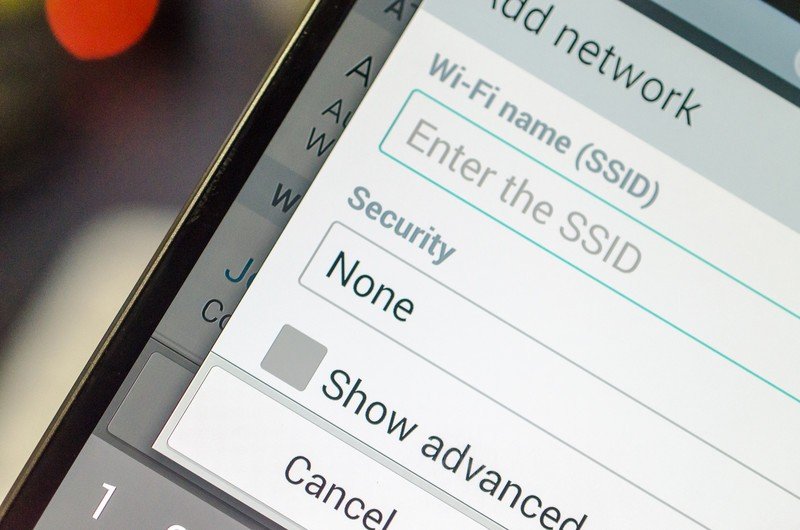
No, not insecure which suggests a lack of proper security, simply unsecured — a wide open network that anyone can connect to without any passwords or setup.
When you connect to Wifi at home or at work, or fifty-fifty at a friend'due south house, chances are yous need to know the countersign y'all're asked for the very first time you connect from your Android. That's considering you are on a secured Wifi network. On the flip side, when y'all're walking downwards the street and can connect (or go connected automatically) to a Wifi network you have never used before, y'all're using an unsecured network. While the merits of securing your own Wifi network at domicile are best left for some other commodity, know that having an unsecured Wifi network means I can sit down outside your firm and use your Cyberspace to do things that aren't exactly legal. Or Google volition connect when a Street View car drives by and polls the local AP's for location data.
You probably want to secure your Wifi network at home. If you lot demand help setting upwardly your router, spring into the forums and ask. Fifty-fifty though information technology's not Android-specific, everyone here at Ac wants yous to be safe on the Internet.
That ways you gear up up an encrypted password on your access bespeak, and any and every device that wants to connect has to enter the same password for access. The security algorithm used for these connections may be WEP (Wired Equivalent Privacy), WPA (Wifi Protected Access) or WPA2 (a second generation and more secure version of WPA). Like everything else in the IEEE 802.11 specifications, security algorithms get revamped and improved. When security vulnerabilities were plant in the WEP protocol, WPA was designed as a quick patch that all devices able to apply WEP could likewise utilise. WPA2 came later, and is more secure, but some very old equipment may non support information technology.
Your phone supports WPA2 (as well every bit older standards and maybe even things like 802.1xEAP), and that's the suggested manner to secure any Wifi network. If you're setting upward a Wifi network manually, y'all'll desire to dig a footling deeper into all the various security protocols and algorithms available, simply generally using WPA2 with a strong AES encrypted key is accepted as safety.
What nigh WPS?
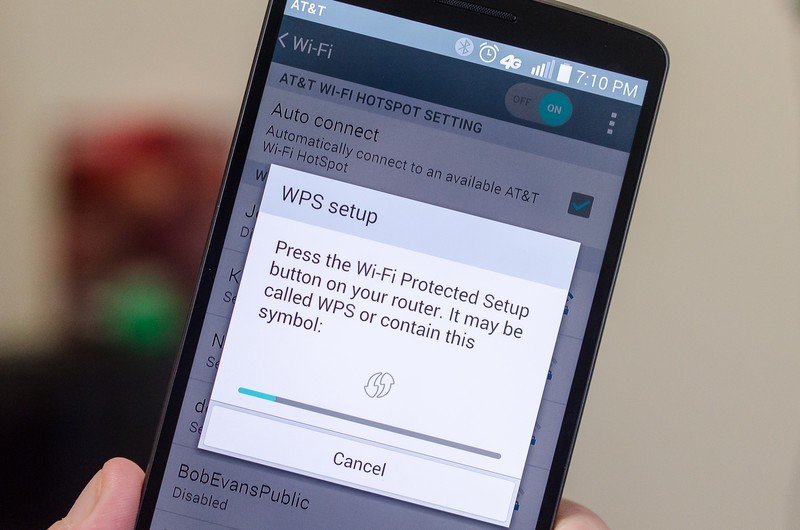
WPS stands for Wifi Protected Setup. The goal of WPS is to allow users who don't know a lot about wireless security to let their hardware fix things up automatically. When information technology works, it'south very easy and every bit secure as doing it by hand. The issue is that dissimilar manufacturers accept different means of initiating WPS, and it's a fiddling clunky.
There are four ways to utilize WPS to add a device to a network — the push-push method, the PIN method, the NFC method and the USB method. NFC and USB are optional ways to set things up, and so your Wifi certified device may non back up one or both. Android devices typically use the Push button Button or Pivot method, just in theory could support NFC and USB every bit well.
To use WPS, y'all need it enabled on the router you want to connect to. Most Android users will and so button a button on their router, then choose WPS Button from the bill of fare if the Wifi settings. Alternatively, y'all can connect to your routers control panel interface and ues the Pivot method. Do notation that using a WPS Pivot makes your network vulnerable to a very specific and very difficult to perform brute-force attack. If you have access, and know how, disabling Pivot access for WPS is a adept thought.
Of class, using WPS makes your network vulnerable to any physical intrusion. If I can get into your living room, I can push the button on your router or look at the network properties on a Windows computer and get the passphrase. (Never mind the other obvious implications.) And so don't let anyone like me into your living room, m'kay?
The advanced Wifi setup menu on Android
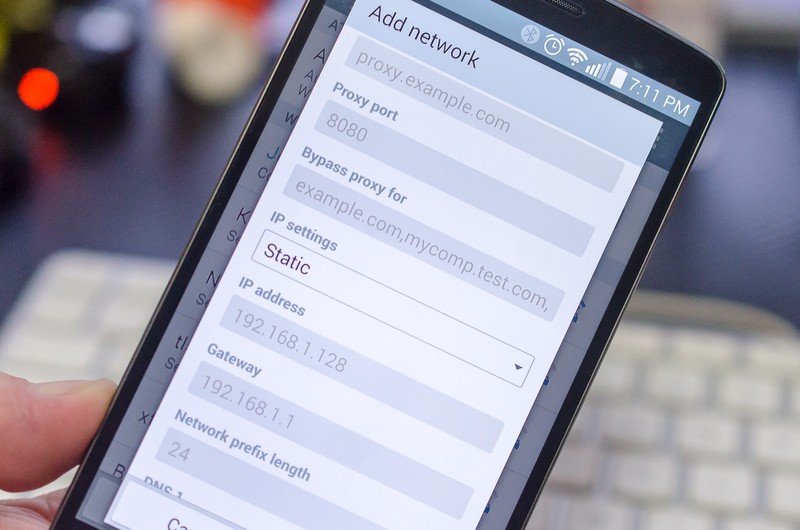
If you need to connect to a wireless network that doesn't broadcast it's SSID or requires special settings you will need to bring upward the window to manually add together a connection. In that location'southward nothing scary or complicated in here, merely you lot will need to know a few things most the network you're going to connect to. The person in charge of administering the network will have all the answers you need.
To connect to a SSID that's subconscious, you lot just enter the name of the network and cull the blazon of security it's using. The residual goes the aforementioned was as connecting to a network that's non subconscious.
Under the advanced options setting (cheque the box and y'all'll see them) you have two new options: Proxy settings and IP settings. On Android, y'all will need to know the Proxy Hostname and port to setup a connection that uses one. You lot can go that information from whoever setup the network. This just tells any spider web browser you lot're using to connect to the Internet through a dedicated space that can practice things like cake certain sites, or cache data that doesn't often get updated.
The IP settings are a petty more complicated, only again the person who set up up the network has all the answers yous demand to set a static IP.
The router you're connecting to may take a DHCP (Dynamic Host Configuration Protocol) server that assigns all the required network info automatically. If it doesn't, you'll need to enter the information by manus.
While you'll rarely always need to set your IP address settings by mitt, there'due south nothing wrong with knowing what you're seeing here. Allow's break information technology down.
- IP address — This is the IP (Internet Protocol) address you want your Android to use. It has to be in the right network range (private IPv4 networks typically utilise 10.0.0.X, 172.16.0.Ten, or 192.168.X.10) and use an available number. Remember — your network admin volition tell you lot what to apply here. Follow his or her instructions or you're not going to have a good fourth dimension.
- Gateway — This is the IP address of a network node that acts tin act as a router or proxy server both on the internal portion of the network every bit well every bit connecting it to the Net-at-big. When you type http://www.androidcentral.com into your browser, by default the request goes to the gateway which and so directs the IP traffic so that Lloyd appears in your browseer window. Once more, your network admin will give you lot this address, and if you don't enter it correctly you're non going to exist able to practise much of anything.
- Network prefix length — This is the aforementioned thing every bit the subnet mask — a way to make sure all devices on the network take the aforementioned network prefix. A router can be used to bridge two subnets together, but that sort of thing is a fleck more advanced that what we're going to encompass here. For our purposes, unless your network admin tells you something dissimilar, the Network prefix length field should be 24, which equals a subnet mask of 255.255.255.0.
- DNS — You'll probably come across two entries here, labeled 1 and 2. DNS is the Cyberspace's phone book. DNS servers translate a URL that you and I can read, into an IP address that computers can read more easily. There are different options yous tin use here if y'all like. Google DNS is one, and OpenDNS is another. If you lot don't know what those are, just utilize the numbers your network admin gives you lot.
Once you have everything filled in right, printing the connect button and yous'll sign in and be using that Wifi network.
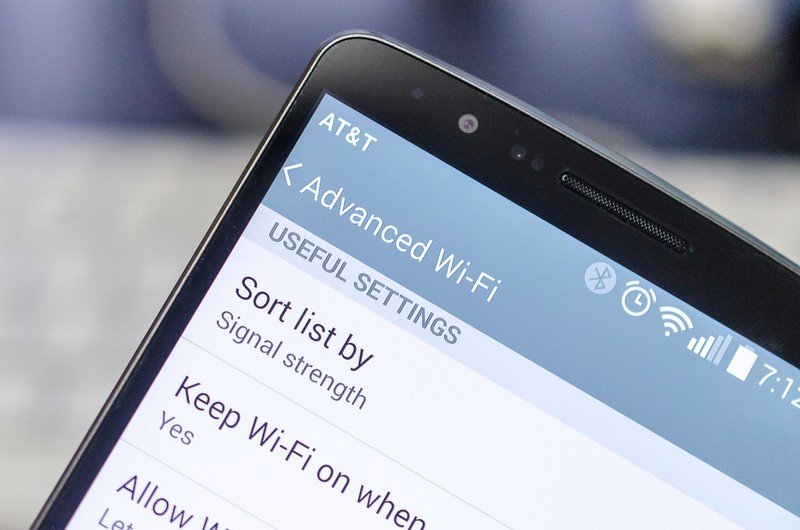
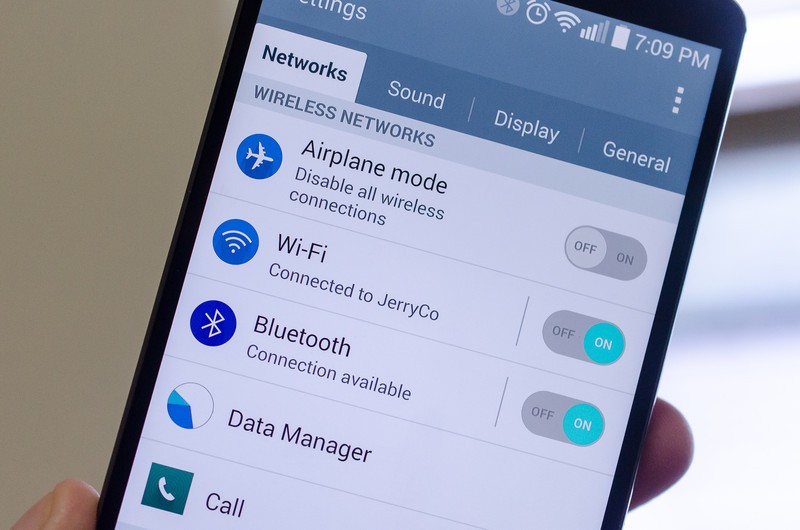
This is one of those things that'south going to vary from device to device. We'll take a expect at the settings and options you lot're nigh likely to see hither, and break them down and so we all know what they mean.
- Wifi notifications — If you lot want to run across a notification telling you there is a Wifi network bachelor (not a crazy idea with data caps in place), you desire this enabled.
- Net availability — A setting using these words usually means that the Wifi network must accept access to the Cyberspace before your Android will connect to information technology. If this is disabled, y'all can connect to Wifi networks that do not take an active Internet connectedness, similar ones provided by Comcast for example. I'g kidding. Put those Xfinity pitchforks abroad.
- List sorting — Here you can cull to see your Wifi network list past availability and point strength or alphabetically. Choose signal strength.
- Go along Wifi on when screen is off — This does exactly what it says it does, just the important part is knowing why you would want it enabled or disabled. If you gear up Wifi to shut off when the screen goes off, you'll have to use the cellular connection for whatever syncing or push messages. This uses more battery than Wifi. Unremarkably, you want to keep Wifi on here. If you have a reason to shut Wifi downwardly when your phone is idle, this is where you do it.
- Let Wifi scanning — This lets location services scan for active wireless access points to determine location. Doing so can go your position quicker and draws less power than using GPS solitary, just for the sake of privacy y'all can disable it hither.
- Avert poor connections — This switches you off of a Wifi network once the signal gets very weak. It will either connect you to another Wifi network or back to 3G / 4G when it stops the connection. I drawback is that networks with a weak indicate won't appear in your list of available networks.
- Bombardment saving while on Wifi — This setting really works! What it does is slow down or stop your wireless radio's network scanning. When your telephone actively scans for available connections, information technology uses more than power. The power to alter this setting is something that custom ROM builders have done since the G1, but now about vendors include it right in the advanced menu settings. If you disabled Wifi scanning for location, you might besides enable this and maximize every milliampere from your battery.
- Your MAC accost and IP address — The MAC address of your Wifi radio is congenital into the hardware (though it'due south possible to modify what's reported via software), and you lot may need information technology for things like setting a reserved IP address in a DHCP server. That's where y'all'll observe it. Likewise for your IP address — if you need to know it, this is a handy identify to discover it. Normally, you'll never need to know either of these and then there'southward no need to write anything down or try to memorize information technology.
Your phone may have other options that are easy to understand, or the wording may be a little unlike that what nosotros used hither. Merely on well-nigh Androids, this is all the information y'all'll demand when things get avant-garde.
Remember, this isn't meant to be course textile for the TCP/IP portion of the MCSE examination. This is just a basic explanation of everything yous're likely to encounter at in one case or another while using Wifi on your Android.
While most of the time you lot tin can just enter a countersign and become do Internet things, it's always a good idea to have a fiddling background about everything you're seeing.
Knowledge is power.

Jerry is an apprentice woodworker and struggling shade tree mechanic. There's zip he can't accept autonomously, but many things he can't reassemble. You'll find him writing and speaking his loud stance on Android Central and occasionally on Twitter.
Source: https://www.androidcentral.com/everything-you-need-know-about-android-and-wifi
0 Response to "How to Increase Wifi Upload Speed Android"
Postar um comentário